
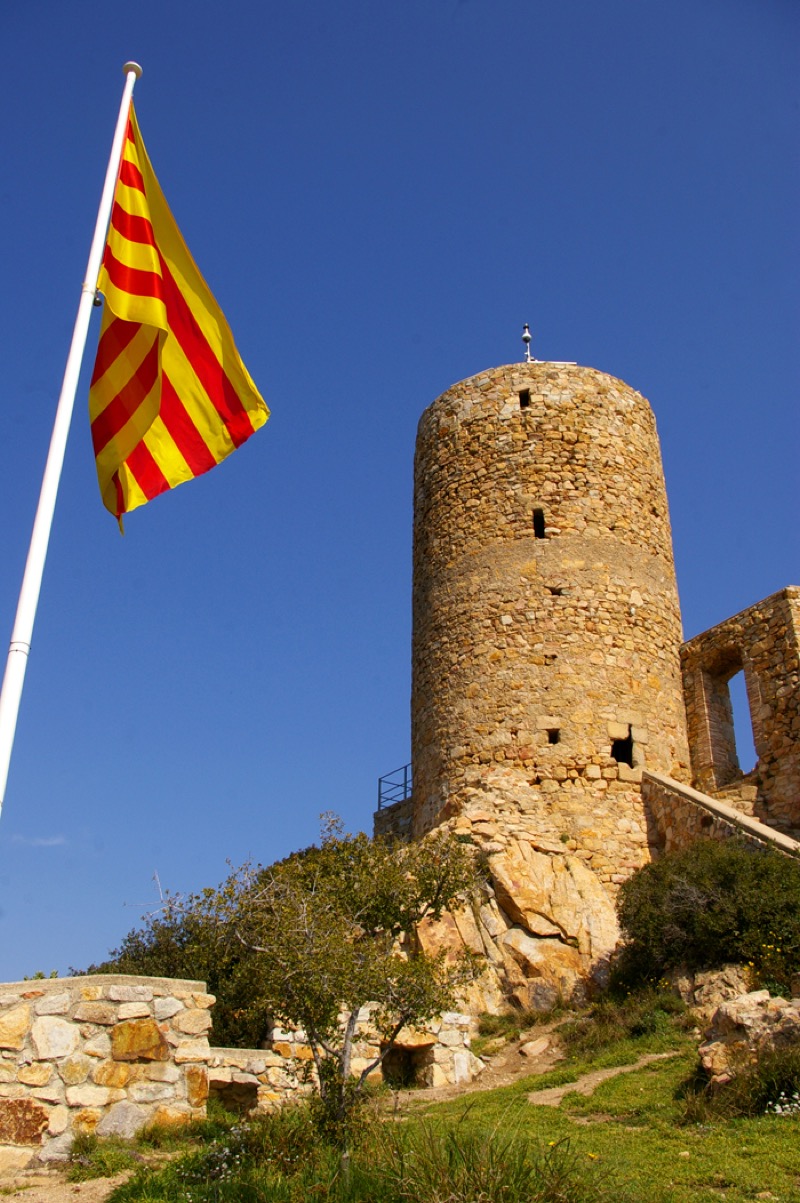
Rising from a sharp rocky peak at 592 metres above the Maresme coast, the Castell de Burriac is an unmistakable landmark visible from the beaches and motorway of the Costa del Maresme. Its jagged silhouette — a tall round tower with curtain wall fragments — has watched over the coastal plain since the early medieval period, and the hike to its ruins rewards visitors with some of the finest panoramic views in the province of Barcelona.
The castle’s origins date to the 10th century, when Frankish lords fortified the summit to control movement along the Via Augusta — the ancient Roman road that ran along the Catalan coast. The structure grew significantly in the 12th and 13th centuries under the Viscounts of Cabrera, one of the most powerful noble families in medieval Catalonia. At its peak the complex included a large cylindrical tower, curtain walls, a chapel, and residential quarters for the garrison and noble inhabitants.
The castle’s strategic importance waned as the nearby town of Mataró grew in prominence in the 15th and 16th centuries. It fell into disuse and gradual ruin, and by the 17th century it had been largely abandoned. Earthquakes and erosion have since reduced most of the outer walls to foundations, though the main tower still stands to a considerable height.
The surrounding natural park of the Serralada Litoral protects both the castle and its extraordinary biodiversity — the Mediterranean scrubland below the summit is rich in endemic plants and nesting birds of prey. The site has been a popular hiking destination for Barcelona residents since the early 20th century.