
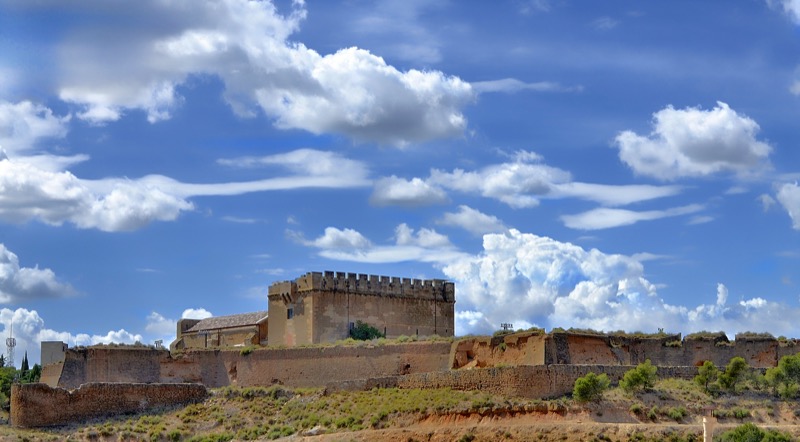
Perched on the Turó de Gardeny hill on the western edge of Lleida, the Castell de Gardeny commands panoramic views over the city, the Segre river, and the vast agricultural plain that stretches toward Aragon. It is one of the best-preserved and most historically significant Templar sites in the Iberian Peninsula.
The castle was built immediately after the Reconquista of Lleida. In 1149, Ramon Berenguer IV, Count of Barcelona, captured the city from the Moors after a long siege. As a reward for their military support, the Knights Templar received the hill of Gardeny and the licence to build a commandery there. Construction began almost immediately, and by the late 12th century Gardeny had become the most important Templar establishment in the Crown of Aragon — a fortified complex encompassing a castle, a Romanesque church (Santa Maria de Gardeny), a chapter house, and extensive residential quarters.
For over 150 years, Gardeny served as the headquarters from which the Templars managed their Iberian operations: receiving novices, administering vast landholdings across Catalonia and Aragon, and dispatching knights to the Crusades and Iberian frontier wars. The Romanesque church of Santa Maria, built in the 1170s, survives largely intact and is one of the finest Templar churches in Spain.
When the Templar Order was dissolved in 1312, Gardeny passed to the Knights Hospitaller, who maintained it as an active commandery for another four centuries. The site was later used as a military installation by successive Spanish governments, a use that paradoxically helped preserve its medieval structures by keeping it off-limits to development.
Today the castle is managed as a monumental complex by the city of Lleida. The visit includes the Templar church, the fortress walls, a museum covering the history of the Knights Templar in Iberia, and an audiovisual presentation on the castle’s 800-year history.