
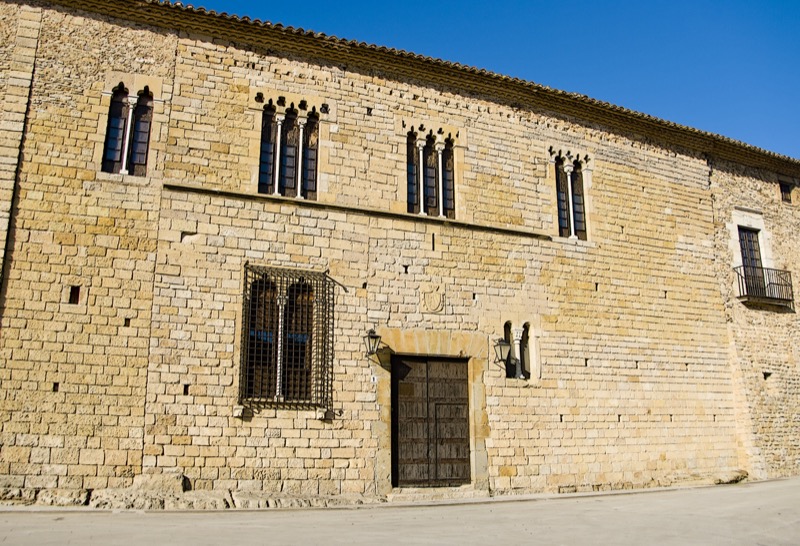
Peratallada — whose name in Catalan means “carved stone” — is arguably the most perfectly preserved medieval village in Catalonia, and its castle is inseparable from the village it has protected for a thousand years. The entire ensemble: castle, walls, moat, and honey-coloured stone houses, is carved from and built on the same sandstone plateau, creating an organic unity unlike anywhere else in the region.
The castle’s documented history begins in the 10th century, when it appears in records as a fortified residence of the Viscounts of Rocabertí. The current tower, keep, and main hall date primarily from the 11th and 12th centuries. A moat was carved directly into the sandstone bedrock — an unusual feature that required enormous labour but gave the castle exceptional defensive strength.
Throughout the medieval period Peratallada was a centre of feudal power for the Baix Empordà. The castle housed troubadours and scholars; a document from 1065 records one of the earliest known references to the Catalan language in a literary context being associated with this court.
Unlike many Catalan castles that fell into ruin or were demolished, Peratallada remained inhabited and was progressively adapted into a noble residence. It passed through various aristocratic families until the 20th century. Today the castle is privately owned but the tower is open to visitors, and the village streets — lined with restaurants in vaulted medieval halls — are freely accessible.